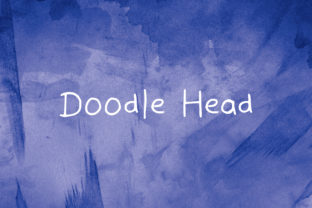
Doodle Head: The Handwritten Sans Serif Font That Balances Readability and Fun
In the vast universe of typography, few fonts manage to strike the delicate balance between personality and practicality. Enter Doodle Head—a simple sans serif handwritten font that brings warmth and approachability to any project without sacrificing clarity. Whether you are designing a children's book, crafting a brand identity for a creative business, or simply looking for a typeface that feels both tidy and playful, Doodle Head offers a refreshing solution. This article explores what makes Doodle Head unique, its practical applications, and why it has become a go-to choice for designers, educators, and content creators alike.
What Is Doodle Head?
At its core, Doodle Head is a handwritten sans serif typeface. That means it lacks the small decorative strokes—called serifs—found at the ends of letters in traditional fonts like Times New Roman. Instead, it offers clean, straightforward letterforms that mimic the natural flow of handwriting. What sets Doodle Head apart from other handwritten fonts is its exceptional readability. While many script and handwritten fonts sacrifice legibility for flair, Doodle Head keeps every character clear and easy to recognize, making it suitable for both short headlines and longer passages of text.
The font includes basic punctuation, numerals, and uppercase and lowercase letters, giving you everything you need for everyday writing tasks. Its design avoids excessive loops, uneven baselines, or exaggerated flourishes, which means it looks hand-drawn but still reads like a polished typeface.
Why Readability Matters in Handwritten Fonts
One common misconception about handwritten fonts is that they are inherently difficult to read. Many script fonts, for example, use connected letters and varied stroke widths that can blur together, especially at smaller sizes. Doodle Head challenges this assumption. By keeping letterforms simple, evenly spaced, and consistent in weight, it ensures that the reader's eye moves smoothly from one character to the next without guessing.
This makes Doodle Head particularly valuable for projects where you want a human, personal touch without sacrificing comprehension. Think of it as the friend who has great handwriting but also remembers to write clearly enough for everyone to read.
The Core Characteristics of Doodle Head
Understanding what makes Doodle Head tick helps you decide when and where to use it. Let's break down its defining traits:
- Sans serif structure: Clean, unadorned letterforms that feel modern and approachable.
- Handwritten aesthetic: Slight irregularities in stroke and shape give it an organic, human quality.
- High legibility: Even at smaller sizes, each character remains distinct and easy to read.
- Tidy appearance: Consistent baseline, even spacing, and uniform stroke weight create a neat overall look.
- Playful personality: Despite its tidiness, the font retains a fun, friendly character that feels anything but rigid.
- Complete basic punctuation: Full stops, commas, question marks, exclamation points, quotation marks, and more are all included.
These characteristics make Doodle Head a versatile tool. It is neither too serious nor too silly—it hits that sweet spot where professionalism meets personality.
Practical Applications of Doodle Head
Now that we know what Doodle Head is, let's explore where it shines. Because it balances readability with flair, it works across a wide range of contexts.
1. Educational Materials
Teachers and educators often struggle to find fonts that are both engaging for young learners and clear enough for early reading. Doodle Head is an excellent choice for worksheets, flashcards, classroom posters, and digital learning materials. Its handwritten look feels familiar and friendly, which can help reduce the intimidation factor that some children feel when confronting text. At the same time, its clean letterforms support proper letter recognition and reading fluency.
For example, a kindergarten teacher might use Doodle Head to create alphabet charts or sight-word cards. The font's clarity ensures that students see each letter exactly as it should be written, while its playful vibe keeps the activity light and enjoyable.
2. Branding and Logo Design
Small businesses, creative agencies, and lifestyle brands often want to communicate warmth, authenticity, and approachability. A rigid, corporate font might feel cold, while an overly decorative script can be hard to read. Doodle Head offers a middle ground. Its tidy handwritten appearance suggests a human touch, making it ideal for:
- Cafés and bakeries that want a cozy, handcrafted feel.
- Children's clothing lines, toy stores, or family-friendly services.
- Freelancers (illustrators, writers, designers) who want a personal brand that feels genuine and accessible.
Using Doodle Head in a logo or business name immediately signals that your brand is friendly, down-to-earth, and easy to talk to—all valuable qualities in today's marketplace.
3. Digital Content and Social Media
In the world of social media, standing out is essential, but clarity is equally important. Doodle Head works beautifully for Instagram quotes, Pinterest pins, YouTube thumbnails, and blog headers. Because it is highly readable, it performs well on mobile screens where space is limited and attention spans are short. The font's playful side also helps content feel more personal and less like a template.
Consider an influencer sharing daily motivational quotes: using Doodle Head adds a hand-lettered feel without requiring custom calligraphy. It looks authentic and effortless, which resonates with audiences looking for genuine connections.
4. Invitations, Greeting Cards, and Stationery
For personal projects like wedding invitations, birthday cards, or thank-you notes, Doodle Head brings a sense of intimacy. It looks like something you might write by hand, yet it remains polished enough for formal occasions. Pair it with a simple layout and a soft color palette, and you have stationery that feels both heartfelt and professional.
The inclusion of basic punctuation means you can write full sentences without gaps or missing symbols. You won't have to switch to another font just to add a question mark or an exclamation point—everything you need is already there.
Common Misunderstandings About Handwritten Fonts
Despite their popularity, handwritten fonts are often misunderstood. Let's clear up a few assumptions that might prevent people from using Doodle Head effectively.
Misunderstanding 1: Handwritten fonts are only for informal projects. While Doodle Head certainly works for casual designs, its tidy appearance allows it to function in more structured contexts, such as educational worksheets, book titles, or brand guidelines. The key is pairing it with clean margins, appropriate spacing, and a well-thought-out layout.
Misunderstanding 2: Handwritten fonts are hard to read. This is true for some script fonts, but not for Doodle Head. Remember, its defining feature is readability. The font avoids the extreme slant, variable stroke width, and irregular spacing that often cause legibility issues. Instead, each letter stands on its own, making it accessible even for younger readers or people with visual processing challenges.
Misunderstanding 3: You need a complete font family with many weights. Doodle Head keeps things simple. It typically comes in a regular weight that covers most needs. For the purposes of headlines, body text, and short captions, a single weight is often enough. This simplicity reduces decision fatigue and helps maintain visual consistency across a project.
How Doodle Head Fits Into Modern Work and Creativity
Today, the line between professional and personal communication has blurred. We send emails that sound like conversations, design presentations that feel like stories, and build brands that act like friends. Typography plays a major role in shaping those interactions. A font like Doodle Head supports this shift by offering a visual tone that is human, warm, and clear.
In remote work environments, for instance, internal documents and team newsletters can feel sterile when set in default system fonts. Swapping to Doodle Head for headings or short announcements can inject a sense of personality and make the content feel more welcoming. This may seem like a small change, but it contributes to a culture of openness and connection.
In education, where engagement is often a challenge, Doodle Head helps bridge the gap between formal instruction and playful learning. Teachers can use it to create materials that students actually want to look at, without worrying that the font will cause confusion.
For creative professionals, Doodle Head serves as a reliable tool in the toolbox. It works well on its own, but it also pairs nicely with more structured fonts like geometric sans serifs or subtle slab serifs. The contrast between a clean, readable handwritten font and a more formal counterpart can add visual depth and interest to any design.
Tips for Using Doodle Head Effectively
To get the most out of Doodle Head, consider the following practical tips:
- Use it in moderation. Like any strong personality, Doodle Head works best when it is not overused. Reserve it for headings, subheadings, and short blocks of text where its character can shine.
- Pair it with a neutral background. Because Doodle Head has a hand-drawn quality, it looks great on white, cream, light gray, or pastel backgrounds. Busy patterns or dark backgrounds can compete with its subtle details.
- Adjust line height and spacing. Handwritten fonts often benefit from a little extra space between lines. This keeps the text airy and easy to scan.
- Combine with simple imagery. Doodle Head complements line drawings, doodles, watercolor illustrations, and minimalist photography. Avoid pairing it with hyper-realistic or high-contrast visuals that might clash with its casual vibe.
- Test at different sizes. While Doodle Head is readable at small sizes, it really comes alive at medium to large sizes where its handwritten nuances are visible.
Final Thoughts: Why Doodle Head Deserves a Place in Your Font Library
In a world full of typefaces that prioritize style over substance—or substance over style—Doodle Head offers a rare combination of both. It is a simple sans serif handwritten font that stays true to its name: it looks like something you might doodle in a notebook, yet it reads with the clarity of a carefully designed typeface. Its tidy appearance and playful spirit make it suitable for everything from classroom worksheets to brand logos, from social media posts to personal correspondence.
Whether you are a experienced designer looking for a fresh option or someone just starting to explore typography, Doodle Head provides an accessible entry point. It reminds us that fonts do not have to be complicated to be effective. Sometimes the best choice is one that feels natural, reads easily, and brings a touch of humanity to every word.
So the next time you need a font that feels both professional and personal, consider Doodle Head. It might just be the perfect balance you have been searching for.