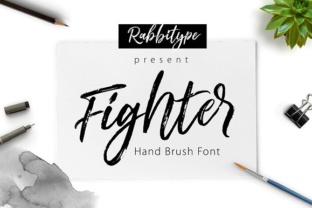
Fighter and Fighter: Integrating a Handwritten Script Font into Your Workflow
Choosing the right typeface is a decision that touches every stage of a project, from initial concept to final production. A font does more than display letters—it sets tone, guides readability, and reinforces identity. Fighter and Fighter is a beautiful handwritten script that brings a fluid, human quality to digital and print work. Its professional appearance and easy readability make it suitable for marketing branding, craft projects, and everything in between. But how do you move from simply liking a font to using it effectively within a real process? This article explores where Fighter fits before, during, and after your work, and how to integrate it smoothly into your routine.
What Fighter Is and Where It Belongs
Fighter is a handwritten script with a natural flow. Unlike many script fonts that sacrifice legibility for flourish, Fighter balances character with clarity. The strokes are smooth but not overly ornate, making it approachable for both formal branding and personal projects. It works well in headlines, short phrases, logos, and even body text when used at larger sizes.
In a broader workflow, a script font like Fighter serves as a tool for emotional communication. Serif or sans-serif fonts often convey stability or neutrality; a script brings warmth, movement, and a sense of direct human touch. This makes it valuable for any project where you want to connect with an audience on a personal level—product packaging, social media graphics, handwritten-style quotes, or event invitations.
Before the Project: Planning for Type Compatibility
Integrating Fighter starts before you open a design file. Consider what role the font will play in your overall asset system. Will it be a primary display face or an accent? How will it interact with other typefaces in your project? Planning ahead prevents inconsistency and rework.
- Pairing with other fonts. Fighter pairs well with clean sans-serifs like Open Sans, Lato, or Roboto for body text. The contrast between a fluid script and a neutral sans creates visual hierarchy without competition. Avoid pairing it with another heavy script, as this can muddy readability.
- Licensing and storage. Ensure you have the correct license for your use case—commercial versus personal. Store the font file (TTF or OTF) in a dedicated asset folder that is backed up and accessible across devices. If you work with a team, use a font management tool like FontBase or Adobe Fonts to keep everyone synced.
- Color and background preparation. Script fonts often require more breathing room. Plan for sufficient white space around Fighter text. Avoid busy backgrounds that compete with the strokes. A solid, light background or a subtle texture usually works best.
By addressing these factors early, you reduce friction when it is time to execute.
Using Fighter During Creative Execution
Once your project is underway, applying Fighter effectively becomes a matter of fine-tuning placement, size, and spacing. Because it is a handwritten script, small adjustments in kerning or leading can have a large impact on overall feel.
Marketing and Branding Applications
Fighter works exceptionally well for logos, taglines, and email headers. In a brand identity project, use it to convey authenticity and approachability. For example, a local coffee shop’s menu board or a freelancer’s website hero section can use Fighter for the name, paired with a clean sans for descriptive text.
- Social media graphics: Use Fighter for quote overlays or short promotional text. Keep the text limited to 10–15 words per graphic to maintain legibility on mobile screens.
- Print materials: Business cards, flyers, and product labels benefit from the font’s fluidity. Test the font at the actual physical size before committing to print, as fine strokes may thin out at small sizes.
- Web use: If using Fighter as a web font, consider using a subset that reduces file size. Use
font-display: swapin CSS to avoid invisible text while the font loads.
Craft Projects and Creative Work
For hobbyists and small-scale producers, Fighter adds a custom, handmade feel without needing your own handwriting. Use it for wedding stationery, bullet journal section headers, or vinyl decal designs. When working with craft materials (cardstock, wood, fabric), test the font’s spacing—some script fonts require manual kerning adjustments to avoid letters from overlapping too much.
Practical tip: Use Fighter at sizes above 24pt for body-like text. Below that, consider using it only for short words. The natural variation in stroke width can make extended reading tiring at very small sizes.
After the Project: Review, Iterate, and Archive
The post-production phase is often overlooked, but it is where you ensure quality and consistency across projects. Fighter should not be a one-off choice—if it becomes part of your toolkit, document how you used it so you can repeat successful decisions.
Quality Control and Consistency
After finishing a design, check how Fighter renders in different contexts. Export a sample that includes all brand elements to see if the font maintains integrity at various output sizes. Look for letters that may be confused (e.g., rn vs. m, cl vs. d) in your specific text. Because Fighter is a script, some ligatures or alternate characters may be available—review the font’s glyph set to use the most appropriate forms.
- File organization: Save a master assets file with Fighter usage rules: minimum size, recommended leading, color palette, and pairing notes. This ensures anyone picking up the project later can replicate the look.
- Update your font library: After a project, archive the version of Fighter you used. Fonts sometimes get updated; keeping a copy tied to a specific project prevents surprises in future edits.
Practical Integration with Tools and Platforms
Fighter interacts with design software, web development tools, and print services in distinct ways. Knowing these interactions helps you choose the right format and avoid common pitfalls.
Desktop Design Software
Fighter installs like any standard font. In Adobe Illustrator, InDesign, or Photoshop, you can access the full glyph palette. For scripts, using the Glyphs panel is essential—many scripts have alternate characters that create more natural connections between letters.
- Kerning is critical. Automatic kerning may not be perfect for a script font. Manually adjust pairs like “Yo” or “Wa” to avoid awkward gaps.
- Outlining fonts: When sending files to print, outline the text if the printer may not have Fighter installed. Keep a copy of the original editable file with live text for future edits.
Web and Mobile
For websites, you can host Fighter via self-hosting or a service like Font Squirrel’s Webfont Generator. Since scripts contain many unique shapes, the file size can be larger than a simple sans-serif. Use only the weights and characters you need to minimize load time.
- Fallback fonts: Specify a cursive fallback (like “Brush Script MT”) or a generic “cursive” in your CSS. This preserves the general style if Fighter fails to load.
- Accessibility: Avoid using Fighter for long body paragraphs on a website; it reduces readability for screen readers and people with visual processing differences. Reserve it for headers and short emphasis text.
Print Production
When preparing files for print, request a proof. Some print services may misinterpret script fonts, especially if thin strokes become too light. Ask for a digital proof before production. Set your document in CMYK and ensure the font color has enough contrast with the paper.
Balancing Aesthetics and Functionality
A script font like Fighter brings personality, but it also requires discipline. Use it sparingly to maintain impact. Overusing a script across an entire document can create visual noise and reduce professionalism.
- Do: Use for logos, headers, subheadings, pull quotes, and short callouts.
- Don’t: Use for dense paragraphs, data tables, or any situation where legibility takes precedence over style.
- Test with real content: Don’t rely on placeholder text. Script fonts often look different with actual words, especially words that include multiple connecting letters like “minimum” or “lovely.”
Workflow Examples Across Roles
Understanding how Fighter fits into specific workflows can help you adapt it to your own context.
Example 1: Freelance Brand Designer
A freelance designer builds a brand identity for a yoga instructor. They use Fighter for the logo mark and class schedule headers. During prep, they create a style guide that specifies Fighter only for titles, with Lato for body text. In execution, they adjust kerning in Illustrator and export SVG files for web. After the project, they archive the client assets and update their personal font library with usage notes.
Example 2: Small Business Owner Creating Product Labels
A maker of handmade candles uses Fighter on product labels. Before packaging, they test the font at the label size (2x3 inches) and find that some letters are too close. They increase tracking slightly and switch to a heavier weight. They pair it with a sans-serif for ingredient lists. The font adds a personal touch that resonates with customers.
Example 3: Educator Preparing Handout Materials
A teacher designs workshop worksheets and wants a warm feel. They use Fighter for the title of each worksheet and for key vocabulary words. During execution, they keep body text in a clean sans to ensure readability. After the workshop, they collect feedback; students appreciate the friendly design but confirm the script did not interfere with understanding.
Long-Term Consistency and Asset Management
If Fighter becomes a regular part of your toolkit, treat it as an asset that requires maintenance. Keep a single source of truth for the font file—preferably the original download from the designer or marketplace. Store any custom variations (such as manually kerned pairs or alternate glyph selections) in a companion document.
- Version control: If a project uses Fighter version 1.0 and later you upgrade to 2.0, document the change. Some letter shapes may differ slightly, affecting existing designs.
- Team collaboration: Use a shared cloud folder for font files and a simple README that explains when and how to use Fighter. This reduces guesswork and ensures everyone applies the font consistently.
Integrating a font like Fighter into your work is not just about picking a style. It involves thoughtful planning before the project, careful application during execution, and systematic review after. Whether you are a marketer crafting a campaign, a hobbyist making invitations, or a business owner building a brand, Fighter can serve as a reliable tool that adds warmth without sacrificing professionalism. By understanding its behavior across platforms and planning for consistency, you make the font work for you—not the other way around.