Hello Cute: A Versatile Modern Font for Branding, Marketing, and Personal Projects
When selecting a typeface for a creative project, the choices can feel endless. Some fonts are serious and corporate, while others lean playful or decorative. Hello Cute enters that space as a modern, fresh font designed to bring warmth and personality without sacrificing readability. It fits a range of uses, from professional branding to personal invitations, but understanding where it excels and where it may fall short helps you decide if it is the right tool for your specific need.
What Makes Hello Cute Distinct?
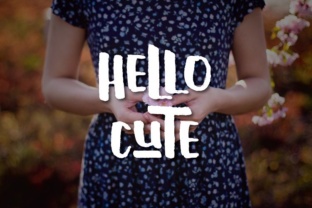
Hello Cute is not just another display font. Its design balances rounded curves with subtle irregularities that give it a handcrafted feel. The letterforms are clean enough to remain legible at moderate sizes, but they carry an approachable, friendly tone that many traditional serif or sans-serif fonts lack. The “cute” aspect comes from proportion and spacing rather than excessive ornamentation, which means it can work across contexts without overwhelming the message.
This font fits well in modern design trends that favor authenticity and warmth over cold minimalism. Whether used in a logo, a social media graphic, or a product label, Hello Cute brings a sense of ease and connection. Its fresh quality also means it doesn’t feel dated or tied to a specific era, which is often a concern with highly stylized typefaces.
Comparing Hello Cute with Similar Font Categories
To decide if Hello Cute is the right choice, it helps to see how it stacks up against other common font categories used for similar purposes.
Script Fonts
Script fonts imitate handwriting or calligraphy. They can feel elegant or informal, but many script fonts suffer from legibility issues, especially at small sizes or in all-caps settings. Hello Cute, while having a friendly character, is not a script. Its letters are distinct and stand alone, which makes it easier to read in short phrases or headlines. If you need a font that conveys warmth but must work on product packaging or web banners where clarity matters, Hello Cute often outperforms heavy scripts.
Sans-Serif Fonts
Standard sans-serif fonts like Arial or Helvetica are neutral and highly legible. They are safe choices for body text and corporate communications, but they rarely evoke emotion. Hello Cute fills that gap by offering a similar cleanliness but with added personality. The tradeoff is that Hello Cute is not designed for long reading passages. For a few words on a poster or a headline on a website, it works beautifully. For paragraphs of text, a conventional sans-serif is still the better option.
Hand-Drawn and Decorative Fonts
Many decorative fonts are highly stylized and only suitable for niche uses. They can be difficult to pair with other elements and may look out of place in professional settings. Hello Cute sits between decorative and neutral. It has enough uniqueness to be memorable, but it doesn’t demand all the attention. This makes it easier to combine with other fonts or design elements. It can serve as the primary display font without clashing with a more subdued secondary font.
Strengths and Best-Fit Situations
Hello Cute shines in projects where the goal is to create an immediate sense of approachability. Here are some contexts where it is often the right choice:
- Branding for small businesses and startups – Companies in creative fields, hospitality, children’s products, and wellness industries benefit from a font that feels human and trustworthy.
- Marketing materials – Flyers, social media posts, and email headers that need to stand out without being aggressive. The font draws the eye but does not shout.
- Personal projects – Invitations, greeting cards, scrapbooks, and blogs where a personal touch matters. Hello Cute conveys a handmade aesthetic without requiring actual handwriting.
- Digital content – YouTube thumbnails, Instagram stories, and website hero sections. Its modern look aligns with current visual trends on social platforms.
Because Hello Cute is not overly ornate, it also works well in layered designs. You can place it over a background image, use it with icons, or pair it with a simple sans-serif for contrast. Its versatility reduces the need for multiple fonts in a single project.
Tradeoffs and Limitations
No font is perfect for every job, and Hello Cute has constraints that you should consider before committing to it.
Legibility at small sizes – While the font is clean, its cute proportions may make it hard to read below 16–18 pixels, especially on screens. Avoid using it for body text, captions, or any place where the viewer needs to read quickly at a distance.
Formal contexts – If you are designing for a law firm, a financial institution, or a medical practice, Hello Cute will likely feel out of place. These industries benefit from conservative, neutral typography that signals reliability. Using a font with a cute voice could undermine the intended seriousness.
Limited character set – Depending on the version you acquire, Hello Cute may not include extensive glyphs for non-English languages, ligatures, or alternate characters. Check the font’s full specification if your project requires multilingual support or special typographic features.
Trend sensitivity – Though Hello Cute is modern now, highly stylistic fonts can become associated with a specific period. If you need a font that will remain relevant for a decade or more, a timeless sans-serif or serif may be safer.
When to Choose Hello Cute vs. an Alternative
The decision often comes down to the tone you want to set and the medium you are designing for.
Choose Hello Cute when: you want to communicate friendliness, creativity, and modern simplicity. For a bakery logo, a children’s book cover, or a personal brand centered on lifestyle content, this font creates an instant emotional connection. It also works well when paired with photos or illustrations that have organic shapes, because the typeface feels natural rather than rigid.
Consider an alternative when: your project demands high formality, long-form reading, or extreme legibility at tiny sizes. A clean sans-serif like Open Sans or a neutral serif like Merriweather would serve you better for a corporate report, an academic poster, or a mobile interface where every pixel counts. Similarly, if you need a font that conveys luxury or sophistication, a refined serif or script might be more appropriate.
Practical Examples of Hello Cute in Action
Imagine you are designing a logo for a small coffee shop called “Brew & Kindness.” Hello Cute would work well for the shop name, especially if the rest of the branding uses textured backgrounds and natural colors. The font’s rounded ends suggest warmth and a handcrafted approach, aligning with the shop’s values.
Now compare that to a logo for an accounting firm named “Precision Ledgers.” The same font would signal a lack of seriousness, potentially damaging trust. In that case, a clean sans-serif with sharp edges would convey the necessary professionalism.
For a wedding invitation, Hello Cute could be used for the couple’s names in a large headline, paired with a delicate script or a thin sans-serif for the details. The balance keeps the invite personal yet readable. For a concert poster for an indie band, the font’s freshness matches the energy of the event without looking too corporate.
Making an Informed Decision
Selecting a font is not just about personal preference; it affects how your audience perceives your message. Hello Cute offers a distinct voice that works well in many contemporary design projects, especially those aimed at creating connection and warmth. However, it is not a universal solution. By understanding its strengths and limitations, and comparing it with the fonts you might otherwise use, you can decide whether it fits your specific context.
Always test your chosen font in the actual medium you plan to use. Preview it on a screen, print it at the intended size, and see how it looks alongside other design elements. A font that appears charming on a mockup may feel different in real use. If Hello Cute aligns with your project’s goals and audience expectations, it can be a powerful addition to your typography toolkit.