Libiri: A Playful Monoline Script Font for Modern Design
If you have spent any time browsing font libraries for that elusive mix of readability and personality, you know how rare it is to find a script typeface that balances charm without veering into fussy or overly decorative territory. Libiri enters that space as a smooth monoline script font with two versions—Regular and Italic—and it manages to feel both polished and approachable. Whether you are designing for a children's book, a boutique brand, or a social media campaign, Libiri offers a clean, lively aesthetic that works harder than you might expect from a single-weight script.
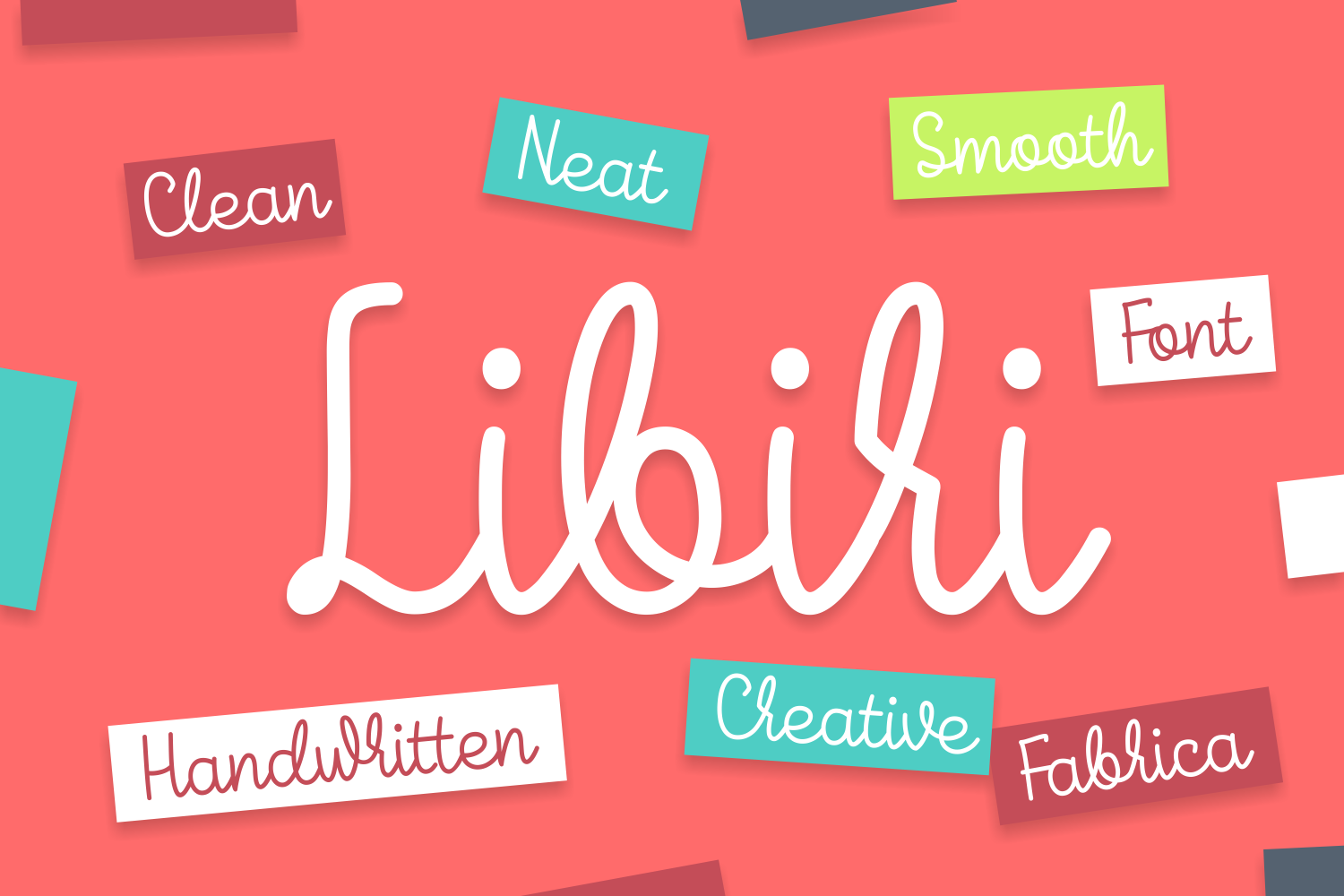
What makes Libiri particularly useful is its versatility. Monoline scripts can sometimes feel stiff or uniform, but Libiri retains a hand-drawn quality that keeps it from looking mechanical. The strokes are consistent in thickness, giving it that smooth, uninterrupted flow, yet the letterforms have enough variation in shape and spacing to feel organic. This makes it a strong candidate for projects where you want a friendly, human touch without sacrificing legibility.
What Sets Libiri Apart from Other Script Fonts
The monoline structure is the first thing you notice. Unlike brush scripts that rely on thick-thin contrast for drama, Libiri keeps a consistent line weight throughout. This gives it a modern, clean look that works well at both small and large sizes. You can use it for body text in a children's book or blow it up for a headline without losing clarity.
Another notable quality is the availability of both Regular and Italic versions. Many script fonts only offer one style, which limits how you can use them in layouts. With Libiri, you have options. The Italic version adds a subtle slant and slightly more dynamic movement, which is perfect for emphasis or secondary text. This pairing gives you flexibility in designing invitations, posters, or digital content where hierarchy matters.
The font also handles spacing well. Monoline scripts can sometimes feel cramped or airy depending on the design, but Libiri strikes a good balance. The default letter spacing is generous enough to maintain readability even at smaller sizes, yet tight enough to keep the script feeling connected. This is a practical advantage when you are typesetting longer passages or working with multi-line blocks of text.
Practical Applications Across Different Environments
Libiri's playful but professional demeanor opens up a wide range of uses. Below are some of the most effective applications I have seen and recommend based on real-world projects.
Children's Books and Educational Materials
This is perhaps the most natural fit. Libiri's smooth, readable letterforms work well for early readers who benefit from clear typography. The playful curves and friendly appearance help reduce the intimidation factor of text, making it a solid choice for storybooks, workbooks, flashcards, and classroom posters. Pair the Regular version for body text and use Italic for emphasis or character dialogue to create visual variety without overwhelming young readers.
For educators designing their own materials, Libiri offers a way to maintain a cohesive, engaging look without needing multiple font families. You can use it for headings, captions, and even short paragraphs, which simplifies the design process and keeps the page looking unified.
Branding for Children's Products and Services
If you are branding a daycare, a toy line, a children's clothing brand, or a family-friendly app, Libiri brings a cheerful yet trustworthy feel. The monoline style avoids being too cutesy, which can sometimes alienate parents or feel dated. Instead, it strikes a tone that is warm and modern. Logo designs, packaging, and promotional materials all benefit from this balance.
I have seen Libiri used effectively on product labels for organic baby food and on signage for play cafes. In both cases, the font contributed to a brand voice that felt approachable without sacrificing professionalism. The Italic version works particularly well for taglines or secondary brand messaging.
Social Media and Digital Content
For content creators, marketers, and bloggers, Libiri is a handy tool for making posts stand out in crowded feeds. Its clean lines render well on screens, even at smaller sizes, which is critical for mobile-first content. Use it for quote graphics, promotional banners, Instagram Stories, and Pinterest pins. The playful nature pairs nicely with bright color palettes or pastel backgrounds, but it also holds its own against darker, more muted tones.
One practical tip: when using Libiri in digital ads or social media graphics, avoid excessive letter-spacing or distortion. The font's natural rhythm is already well-tuned, so stretching or squeezing it can break the smooth flow. Stick to standard tracking and let the typeface do the work.
Where Libiri Fits in Professional and Commercial Work
Beyond children-focused projects, Libiri has a place in broader commercial design. Invitations, greeting cards, event posters, and boutique branding all benefit from its friendly script style. For wedding invitations or birthday party announcements, the Italic version adds a touch of elegance without becoming overly formal. The Regular version works well for the main body of text, such as event details or RSVP instructions.
For entrepreneurs and small business owners designing their own marketing materials, Libiri reduces the need for multiple typefaces. You can build a consistent brand identity using just this font across business cards, flyers, website headers, and email newsletters. Its monoline structure ensures it prints cleanly, even on lower-quality paper or in smaller sizes, which is a practical consideration for budget-conscious projects.
Another area where Libiri excels is in packaging for artisanal or handmade products. Whether you are labeling candles, soaps, or baked goods, the font's hand-drawn feel complements the handmade aesthetic. It communicates care and attention to detail without looking overly designed.
Benefits Related to Usability and Efficiency
From a usability standpoint, Libiri's simplicity is a strength. Because it is a monoline script, there is less visual noise compared to highly decorative typefaces. This means faster scanning and easier reading, especially for short to medium-length text. For designers, this translates to fewer tweaks and adjustments during layout. You can drop Libiri into a design and trust that it will work without excessive kerning or tracking modifications.
The two-style set (Regular and Italic) also saves time. Instead of hunting for complementary fonts that share a similar feel, you have built-in contrast within the same family. This streamlines the design process and ensures visual consistency across your project.
For bloggers and publishers, Libiri can be used effectively for pull quotes, subheadings, or decorative elements. Its playful character adds personality to otherwise text-heavy pages, helping to break up content and improve user engagement. Readers are more likely to pause on a well-styled quote or highlight, which can improve time on page and overall reading experience.
Practical Considerations When Using Libiri
While Libiri is versatile, there are a few things to keep in mind to get the best results. First, because it is a monoline script, it works best at medium to large sizes for maximum impact. At very small sizes (below 12pt), the consistent stroke weight can cause letters to blend together, especially in the Italic version. For body text in print, I recommend using the Regular version at 12pt or larger with adequate line spacing.
Second, consider the context. Libiri shines in informal, friendly, or creative settings. It may feel out of place in highly formal or corporate environments like legal documents, financial reports, or luxury branding that demands serif sophistication. Knowing when to use it is just as important as knowing how.
Third, test the font with your specific color palette and background. Monoline scripts can sometimes feel flat on very light backgrounds if the color contrast is not strong enough. Darker text on a light background is usually safe, but if you are using light text on a dark background, make sure the weight is bold enough to remain legible. Libiri's standard weight is moderate, so pairing it with a heavier typeface for contrast can help maintain readability in those scenarios.
Finally, if you are using Libiri for branding, consider how it will scale across different mediums. What looks great on a screen may behave differently on a large banner or a small business card. Always test print samples and review digital mockups at actual size before committing.
Real-World Recommendations for Getting Started
If you are new to Libiri, start by experimenting with the Regular version in a familiar project. Try replacing a sans-serif headline in a social media graphic or a children's printable. See how it interacts with your existing color scheme and layout. Then introduce the Italic version for secondary text or call-to-action phrases. This gives you a feel for the font's natural rhythm and helps you identify where it adds the most value.
For educators, consider using Libiri for classroom labels, name tags, or bulletin board headings. The font's friendly appearance can make learning spaces feel more inviting. For marketers, test it in email subject lines or hero images for campaigns targeting families or creative audiences. Small A/B tests can reveal whether the typeface positively impacts click-through or engagement rates.
Entrepreneurs can explore Libiri for packaging revisions or website refreshes. Even a small typography update can modernize a brand's appearance without a full redesign. The low barrier to entry makes it an easy win for improving visual communication.
Overall, Libiri delivers a lot of personality and utility in a compact, two-style package. Its smooth monoline structure, paired with the flexibility of Regular and Italic versions, makes it a practical choice for anyone looking to add a playful yet professional script to their toolkit. Whether you are designing for children, building a brand, or creating content that needs a human touch, Libiri offers a reliable, attractive option that performs well across media. Give it a try on your next project and see how it shapes the tone and feel of your work.