Jellybeans Handcrafted Font: Where Whimsy Meets Practical Design
Some fonts feel like they have a personality—Jellybeans is one of them. Created by Creativeqube, this handcrafted typeface has a playful, almost bouncy charm that immediately catches the eye. But the real question for anyone between 20 and 50 is not just whether it looks good on a screen, but where it actually works in day-to-day projects. Fonts are tools, after all, and understanding how Jellybeans fits into real workflows makes all the difference.
Let’s dive into the scenarios, industries, and creative needs where Jellybeans shines—and where you might want to think twice before using it.
What Makes Jellybeans Stand Out
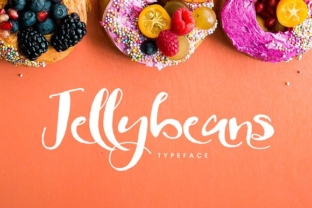
At its core, Jellybeans is a display font with a distinctly hand-drawn feel. It avoids the sterile perfection of machine-generated typefaces, offering irregular letterforms, gentle curves, and a slightly uneven baseline. That’s not a bug—it’s the whole point. This font brings warmth and a human touch to text, which is something many modern designs lack.
The ligatures and alternate characters add further personality, though they’re best appreciated in larger sizes. Think headlines, logos, or short phrases rather than body copy. When you use Jellybeans, you’re inviting a sense of playfulness, nostalgia, or creative freedom into the project.
Event Invitations and Party Branding
If you’re planning a birthday party, baby shower, or casual wedding, Jellybeans can be the backbone of your invitation design. Its handcrafted aesthetic pairs beautifully with pastel colors, confetti illustrations, and organic floral elements. Imagine a “Save the Date” card where the date appears in Jellybeans, softly slanted and slightly irregular—it immediately sets a relaxed, celebratory tone.
A friend of mine used it for her daughter’s first birthday invites. She paired Jellybeans with a simple script font for the details, and the result felt cohesive without being stiff. Guests commented that the invite looked “so much like her” because of its personal, handmade vibe. That’s the exact reaction Jellybeans can evoke.
Small Business Branding for Creative Services
Bakeries, boutique gift shops, art studios, and children’s product brands often struggle to find a font that feels both professional and approachable. Jellybeans fits that sweet spot. Use it in your logo or as a hero font on your website’s homepage to signal that your business is friendly, creative, and not overly corporate.
A local ceramic artist I follow redesigned her shop logo with Jellybeans. Previously, she used a clean sans-serif that looked fine but said nothing about her work. After switching, her brand felt more aligned with the handmade mugs and vases she creates. She told me it increased engagement on her Instagram posts because the font itself felt like an extension of her craft.
Social Media Graphics That Hire the Scroll
On platforms like Instagram, TikTok, and Pinterest, standing out in a crowded feed is crucial. Jellybeans works wonders for quotes, announcements, and product teasers. Because it’s a display font, it grabs attention even in thumbnail-sized images. But use it sparingly—one or two words in Jellybeans with the rest in a simpler font creates a clean hierarchy.
For example, a digital creator launching an ebook might use Jellybeans for the title word “Launch” on a promotional graphic, set against a bold background. The contrast makes people stop and read. The same approach works for countdown posts, motivational quotes, or even personalized thank-you cards for followers.
Packaging and Product Labels
Handcrafted products naturally benefit from handcrafted fonts. If you sell homemade candles, artisanal soap, or specialty tea blends, Jellybeans can be the visual starting point for your labels. It suggests care and authenticity—qualities shoppers value when buying from independent makers.
Consider a small-batch hot sauce brand that wants to look fun and approachable rather than aggressive. Jellybeans on the front label, paired with a spicy illustration, could soften the “heat” and invite a wider audience to try it. That’s a strategic choice, not just a decorative one.
Children’s Books and Educational Materials
While you wouldn’t set an entire chapter in Jellybeans, it’s fantastic for chapter headings, activity book titles, and callouts. The hand-drawn quality resonates with children because it resembles writing they might see in a picture book. Teachers and homeschool parents can use Jellybeans to create fun worksheets, name tags, or bulletin board headings that feel less intimidating than rigid school fonts.
Users Who Get the Most Out of Jellybeans
Graphic designers looking for a quick way to add personality to a project will find Jellybeans easy to integrate, especially if they already have a system for pairing fonts. It works well with slab serifs, geometric sans-serifs, and even monospace fonts—think of it as the playful accent in a larger typographic palette.
Small business owners who manage their own branding can use Jellybeans without needing deep design skills. Because the font itself is so expressive, a simple layout can still look polished. Owners often appreciate that one typeface can do most of the heavy lifting for their brand’s visual identity.
Event planners and party hosts benefit from its versatility. Whether you’re designing a wedding website, a “thank you” sign, or a seating chart, Jellybeans adds that extra 10% of charm that makes an event feel curated rather than generic.
Content creators and influencers who build personal brands can use Jellybeans to create cohesive categories across their platforms—YouTube thumbnails, channel banners, and merchandise mockups all gain a consistent, friendly feel.
What to Consider Before Using Jellybeans
No font is perfect for everything, and Jellybeans has its limitations. Here’s what to keep in mind:
- Legibility at small sizes: Because Jellybeans is handcrafted, it becomes harder to read below 12pt. Avoid using it for long paragraphs or fine print. Reserve it for headlines, subheadings, or short bursts of text.
- Pairing complexity: Its strong personality means the wrong font pairing can clash. Stick with neutral, simple fonts for body copy—something like Lato or Open Sans works quietly in the background while Jellybeans takes the spotlight.
- Formality: Jellybeans doesn’t suit corporate reports, legal documents, or luxury brands that rely on restrained elegance. It would feel out of place on a law firm’s website or a banking app. That’s not a flaw, just a reminder to match the font to the mood.
- Professional printing: The irregular lines and alternate glyphs require careful preview before sending to a printer. What looks good on screen might shift slightly in print, especially at large scale on banners or signage.
Where Jellybeans Falls Short (and How to Work Around It)
One common observation: Jellybeans lacks the variety of weights and styles that more extensive font families offer. You get one main style and perhaps a few extras, which limits subtlety. If you need to differentiate hierarchy solely through weight (light, regular, bold), Jellybeans can’t do that. The workaround is to use another font for secondary text, or to rely on size and color changes instead.
Another thing users notice is that the hand-drawn look sometimes feels inconsistent when paired with extremely clean vector illustrations or photography. If your project uses highly polished, digital-perfect imagery, Jellybeans might contradict the overall aesthetic. The solution? Lean into organic design elements like paper textures, watercolor effects, or hand-drawn icons to create harmony.
Practical Examples to Inspire Your Next Project
Let’s imagine a few concrete scenarios:
- A yoga studio’s opening announcement: Jellybeans for “Find Your Flow” in a warm coral color, paired with a soft sans-serif for location and date. The font conveys gentleness and flexibility, matching the studio’s brand.
- A local farmer’s market poster: Jellybeans for the phrase “Fresh From the Farm” above a list of vendors. The irregular lettering mimics signs you’d see at the market itself, reinforcing the authentic, community-driven vibe.
- A digital planner for creatives: Use Jellybeans for the month header and key section titles (like “Monthly Goals” or “Brain Dump”). The rest stays in a clean font for readability. This adds just enough personality to make the planner feel custom, without sacrificing function.
- A friend’s pop-up art show invitation: Jellybeans for the artist’s name and “Opening Night,” with details in a small, subtle type. The handcrafted font mirrors the artwork’s handmade quality, creating a cohesive visual identity for the event.
Final Observations on Jellybeans
Jellybeans by Creativeqube occupies a sweet spot between playful and professional. It’s not for every project, but when the mood calls for warmth, approachability, and a personal touch, it’s hard to beat. The most effective uses come from understanding its strengths—short, impactful text in situations where a human voice matters. It’s the kind of font that gets people to say, “I feel like I know the person behind this brand.” And in a world full of automated design, that’s a real asset.
For adults navigating their own creative or business ventures, Jellybeans offers a low-risk way to inject personality into visual materials. Test it on a single project, see how it feels, and let the reaction of your audience guide you. More often than not, they’ll notice that something about the design just feels right—and that’s the Jellybeans effect.