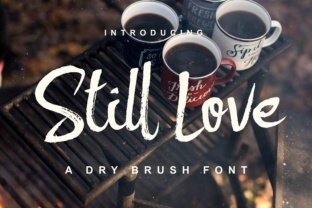
Still Love: A Strategic Choice for Expressive, Human-Centered Design
Still Love is a casual dry brush typeface that brings an authentic, handcrafted feel to digital and print projects. It belongs to a category of design tools that prioritize personality over perfection. While many fonts aim for neutrality and mechanical consistency, Still Love leans into the opposite direction — it embraces variation, texture, and the subtle imperfections of a brushstroke. This makes it a particularly useful asset for anyone who wants to communicate warmth, spontaneity, or a personal touch in their visual messaging.
Understanding when and how to use Still Love requires more than aesthetic appreciation. It demands a strategic approach. The font is not a universal solution; it excels in specific contexts where the goal is emotional resonance rather than rigid readability. For entrepreneurs, marketers, creators, and decision-makers, the challenge lies in aligning the font’s expressive nature with broader goals around branding, communication, and customer experience. Used deliberately, Still Love can become a differentiating element that supports long-term positioning. Used carelessly, it can undermine clarity and dilute a brand’s intended message.
What Makes Still Love Strategically Useful
The value of any design asset is determined by how well it serves an objective. Still Love offers a set of characteristics that are uncommon in mainstream typefaces: a dry brush texture, irregular letterforms, and a sense of movement. These features make it ideally suited for projects where you want to evoke a handmade, approachable, or artistic feel. For instance, a small coffee shop wanting to project warmth and local authenticity might use Still Love on their signage, menus, or social media graphics. A freelance photographer could use it on portfolio pieces to signal a less formal, more intimate style of work.
From a strategic planning perspective, Still Love can support goals such as:
- Differentiation: In markets where many competitors use clean sans-serif or standard serif fonts, a brush typeface can make a brand stand out by creating a distinct visual identity.
- Emotional connection: The casual, human quality of Still Love helps foster a sense of familiarity and trust, which is critical for businesses focused on community or relationship-based marketing.
- Storytelling: Because the font feels organic and unpolished, it lends itself to narrative-driven designs — think posters for a local festival, album covers, or book covers that need a raw, emotional edge.
- Brand personality: Still Love can help define a brand as creative, bold, and unafraid of imperfection. This is especially relevant for lifestyle brands, art galleries, craft businesses, and creative agencies.
However, these benefits only materialize when the font is used with intention. Simply applying Still Love to every piece of collateral without considering context or audience can lead to a disjointed brand experience.
When to Use Still Love and How to Plan Its Integration
Making a thoughtful decision about using Still Love starts with understanding your audience and your communication goals. The font works best in short-form content where legibility is less critical and emotional impact is paramount. Posters, headlines, logos, apparel graphics, and social media overlays are natural fits. In contrast, body text, long articles, or professional documents that require sustained reading are usually poor choices for Still Love because its irregular strokes and varying letter widths can slow down reading comprehension.
To plan effectively, consider the following framework:
- Define the primary goal. Are you trying to capture attention, create a mood, or build brand recall? For example, a poster for an art event might use Still Love to signal creativity and spontaneity. A logo for a boutique might use it to convey handcrafted quality.
- Assess your audience’s expectations. If your audience is conservative or expects a polished corporate look, Still Love may feel jarring or unprofessional. Test it with a sample group or analyze your brand voice to ensure alignment.
- Pair with a supporting typeface. To avoid readability issues, use Still Love for display elements and pair it with a clean, neutral font (such as a simple sans-serif) for body text, captions, or subheadings. This creates contrast while preserving clarity.
- Limit its use. Overusing a distinctive font can dilute its impact. Reserve Still Love for key touchpoints where the impression matters most — the main headline, the logo, or the primary call-to-action.
- Consider color and background. Because the brush texture is a core feature, Still Love often looks best on natural or textured backgrounds that complement its organic feel. White or solid backgrounds can flatten the effect, so experiment with subtle textures, paper tones, or color washes.
Practical Examples of Still Love in Action
Let’s look at three realistic use cases where Still Love supports specific outcomes:
Case 1: A Freelance Illustrator Building a Personal Brand
An illustrator wants to create a logo and website header that convey a whimsical, hand-drawn aesthetic. Using Still Love for her name and tagline immediately signals her creative style. She pairs it with a clean sans-serif for portfolio descriptions. The result is a cohesive brand identity that attracts clients looking for original, art-driven work. The font becomes part of her positioning strategy.
Case 2: A Non-Profit Running a Fundraising Campaign
A community organization launches a campaign around local storytelling. The main poster uses Still Love for the event title and key emotional phrases like “Your Story Matters.” The font’s raw quality mirrors the authenticity of shared stories. Donation forms and informational brochures use a standard serif font for clarity. The strategic use of Still Love helps the campaign feel genuine and community-centered, which in turn supports higher engagement.
Case 3: An E-Commerce Brand Selling Artisan Goods
An online store selling handmade ceramics uses Still Love on product labels, packaging, and social media graphics. The font reinforces the handcrafted nature of the products. The brand’s website, however, uses a neutral font for product descriptions and checkout to ensure ease of reading. The selective application of Still Love helps build a consistent, tactile brand experience across different channels.
Risks of Using Still Love Without Clear Goals
Relying on Still Love without a defined purpose can backfire in several ways. The most common risk is compromising readability. If you use it for lengthy blocks of text, especially in small sizes or low-contrast colors, users may struggle to read the message. This frustrates customers and can lead to lost sales or missed engagement.
Another risk is mismatched brand perception. Not every brand wants to appear casual or artistic. A financial advisory firm or legal practice would likely damage its credibility by using a brush font on official materials. Similarly, using Still Love inconsistently — applying it to some pieces but not others — can create a fragmented visual identity that confuses your audience.
Finally, overuse can make the font feel gimmicky. When every headline, subheading, and caption is in Still Love, the brand loses contrast and the font’s expressive power diminishes. The intent behind the design becomes unclear: is it trying to be artistic, playful, or just different? Without a clear strategic reason, the font becomes a decoration rather than a communication tool.
How to Use Still Love Intentionally for Long-Term Results
Making Still Love part of a long-term design strategy requires discipline and a focus on consistency. Start by documenting where and why you will use the font. Create a simple brand guideline that specifies:
- Approved use cases (e.g., logo, headlines, poster titles).
- Minimum size to ensure legibility.
- Color palette that complements the brush texture.
- Pairing typefaces for body text or secondary elements.
- Avoidances (e.g., reversed text on dark backgrounds unless thoroughly tested).
A thoughtful guideline ensures that everyone involved — whether a freelance designer, an in-house marketer, or a content creator — applies Still Love in a way that reinforces the brand rather than undermining it.
Moreover, consider the broader context of your customer experience. If a customer encounters Still Love on your website homepage, they should see a consistent visual language across other touchpoints like email newsletters, packaging, or event materials. This coherence builds recognition and trust over time, turning a font choice into a strategic asset.
Decision-Making Guidance for Marketers and Creators
Before committing to Still Love for a project, ask yourself three questions:
- Does this font align with the emotional tone I want to set? If the answer is no, choose a different typeface. If yes, proceed to assess practical constraints.
- Will my audience easily read the key message? Test the font in the intended size, color, and background. Get feedback from a few people representative of your target group.
- Does this font support my long-term brand positioning, or is it just a trend? Brush fonts can be seasonal, but Still Love’s natural texture has lasting appeal when used for brands with a genuine human-centered ethos. Avoid adopting it simply because it looks trendy.
Answering these questions honestly helps you move from random decoration to intentional design. The difference is meaningful: one wastes resources on visual noise; the other builds a durable brand identity that resonates with your audience and supports your business goals.
Final Strategic Observations
Still Love is a tool, not a solution. It can amplify your message or obscure it, depending on how you use it. For entrepreneurs, small business owners, creators, and marketers, the key is to view every font choice as part of a larger system of communication. When you select Still Love, you are making a statement about who you are and how you want to be perceived. That statement should be deliberate, consistent, and aligned with your objectives.
In a world where audiences are increasingly skeptical of polished corporate messaging, a font like Still Love offers a way to break through the noise with authenticity. But authenticity without strategy is just chaos. Plan your use carefully, test it against your audience’s expectations, and integrate it into a broader visual system. When done right, Still Love can become a reliable element in your creative toolkit — one that helps you communicate warmth, personality, and a human touch without sacrificing professionalism.
By treating Still Love as a strategic decision rather than a random aesthetic choice, you set yourself up for better outcomes: stronger brand recognition, deeper emotional engagement, and a clearer path toward the results that matter to your business or creative practice.