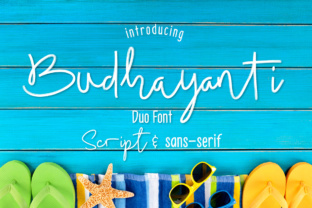
Budhayanti: A Font Duo for Script and Sans-Serif Pairing
Choosing the right typeface can change how a message feels. Budhayanti offers something unusual: a font duo that combines a flowing script with a brush-based sans-serif. Instead of forcing you to hunt for complementary fonts, it gives you two styles built to work together. This matters whether you are designing a logo, building a presentation, creating educational materials, or just exploring typography for the first time. The pair covers both elegance and readability, making it useful across many kinds of projects.
What Budhayanti Actually Is
Budhayanti is not a single font. It is a duo: one script face and one sans-serif face. The script brings a hand-lettered, organic feel. Loops, swashes, and varying stroke widths give it personality. The sans-serif side is brush-based, meaning it carries subtle texture and weight shifts that echo the script without competing with it. Together, they create a cohesive toolkit. You can use them separately, layer them, or mix them across headlines, body text, callouts, and captions.
This pairing solves a common frustration. Many designers spend hours trying to match a script with a neutral sans-serif, only to find the two feel disconnected. Here, the connection is built in. The brush influence in the sans-serif visually echoes the handwritten quality of the script, so the whole set reads as one family even though the styles are distinct.
Why Different People Care About a Font Duo
A font duo is a practical tool. But different people value different aspects of it. A beginner might care about whether it is easy to install and use right away. A professional might focus on how it holds up in print versus on screen. A business owner might evaluate whether it communicates the right tone for their brand. The same product serves different needs, and those needs shape how useful Budhayanti will feel to each person.
Beginners and hobbyists: ease of use and creative exploration
If you are new to typography or design, finding fonts that work together can feel overwhelming. You might not know which serif pairs with which sans-serif, or whether a script needs a neutral partner or something more expressive. Budhayanti removes that guesswork. You get two fonts that are already coordinated, so you can focus on layout, color, and message rather than font matching.
For hobbyists working on personal projects, the duo format also encourages experimentation. You can try the script for a title, then switch to the sans-serif for body text, and see how the balance shifts. Because both styles share a brush origin, even unconventional pairings tend to look intentional. This lowers the barrier to trying things you might not attempt with unrelated fonts.
Installation is straightforward. Most font duos, including Budhayanti, come as standard files that work in common design software, word processors, and even some online tools. You do not need advanced skills to start using them. If you are making a poster for a hobby event, a personal blog header, or a birthday card, having a ready-made pair saves time and reduces frustration.
Professionals and entrepreneurs: commercial value and presentation quality
For professionals, typography is part of the product. Whether you are a graphic designer, a marketer, or a freelance creative, the fonts you choose affect client perception. Budhayanti offers two things that matter in commercial work: consistency and distinction. The script provides a signature feel, while the brush-based sans-serif keeps the design grounded and readable. This works well for branding materials where you need a headline style that draws attention and a supporting style that carries information.
Entrepreneurs building a brand from scratch often face tight budgets. Hiring a designer to custom-create a font pair is expensive. A well-made duo like Budhayanti gives you a professional-level combination at a fraction of the cost. You can use it across your website, social media graphics, packaging, and presentations. Because the two faces are designed together, your brand visuals stay cohesive even when different team members or contractors create materials.
Consider a small business launching a product line. The script version of Budhayanti could anchor the logo or product name on packaging. The sans-serif version could handle ingredient lists, instructions, or contact information. The visual link between the two helps the package feel unified without the script overwhelming the practical text.
Educators and content creators: flexibility and readability
Educators and content creators need fonts that serve two sometimes conflicting goals: engagement and clarity. A script can make a worksheet, slide deck, or video title feel more human and less sterile. But if the script is hard to read at small sizes, it becomes a barrier. Budhayanti addresses this by giving you the sans-serif for longer text and the script for emphasis. You can use the script for headings, pull quotes, or decorative elements, then rely on the brush sans-serif for body copy where legibility matters most.
For bloggers or social media content creators, the duo also works well in thumbnails, banners, and quote graphics. The script adds a handcrafted feel that stands out in feeds filled with clean sans-serif or generic serif fonts. The sans-serif companion ensures that any accompanying text remains easy to scan on mobile devices. This combination can help your content feel more personal without sacrificing professionalism.
If you create online courses or instructional materials, pairing the script for section headers with the sans-serif for step-by-step instructions gives learners visual cues about what matters most. The contrast between the two styles naturally signals hierarchy, which supports comprehension.
Small business owners and marketers: brand identity across materials
Small business owners often wear many hats. You might be handling your own branding, social media, flyers, and website. Having a font duo that works across all these contexts simplifies design decisions. Budhayanti gives you a consistent voice whether you are creating an Instagram post, a brochure, or a store sign. The script brings warmth and personality. The sans-serif keeps the practical information clear and accessible.
Marketers testing different visual approaches can also benefit. Because the duo includes two distinct styles, you can present the same brand message in different tones by emphasizing one font over the other. A campaign focused on craftsmanship or heritage might lean heavily on the script. A campaign about speed or reliability might center the brush sans-serif. Both still feel like the same brand because the fonts share a visual DNA.
For local businesses, a handwritten-style script can communicate approachability and local character. A café, boutique, or studio can use Budhayanti to create signage, menus, takeaway packaging, and digital ads that feel handmade without looking amateurish. The brush sans-serif adds the structure needed for practical information like hours, prices, or contact details.
Evaluating Budhayanti for your own goals and skill level
Before choosing any font duo, it helps to reflect on what you actually need. Here are some questions that can guide your decision, no matter what kind of user you are.
- What is your primary use case? If you are designing a logo or a single hero graphic, the script might do most of the work. If you are creating multi-page documents or websites, the sans-serif will likely carry most of the content. Make sure the duo gives you enough variety in weights, styles, or glyphs for your specific format.
- How much control do you want? Some font duos include extras like alternates, swashes, or ligatures. If you enjoy fine-tuning the look of individual letters, check whether Budhayanti includes those options. If you prefer a simpler setup where everything works out of the box, you may not need extra glyphs.
- Where will the fonts be used? Print and screen can reveal different things about a font. Test the duo at various sizes and on different backgrounds. Look for readability in the sans-serif at small sizes and whether the script remains legible when scaled down.
- Does it match the tone you need? Script and brush-based fonts carry a handmade, approachable vibe. They suit brands and projects that want to feel personal, warm, or creative. If your project requires a formal, corporate, or ultra-minimal look, a different pairing might serve you better.
- What is your budget? Font duos range from free to premium. Consider how often you will use the pair and across how many projects. A one-time purchase that covers both commercial and personal use can be more cost-effective than buying individual fonts separately.
Who might find Budhayanti less useful
Not every project needs a script and brush sans-serif duo. If your work is heavily technical, academic, or requires strict typographic neutrality, this combination may feel too expressive. Similarly, if you need a font family with many weights, matching italics, or extended character support for multiple languages, a duo might not offer enough range. It is also worth noting that script fonts, while beautiful, can be harder to read in long blocks of text. Using the script for large passages would undermine readability, which is why the duo structure matters. If you do not need a script at all, a stand-alone sans-serif or serif family could be a better fit.
Long-term usefulness and learning value
For those still building their design confidence, working with a font duo like Budhayanti offers a low-risk way to practice layout and hierarchy. You can experiment with size, spacing, and placement without worrying about whether your font choices clash. Over time, you develop an eye for how script and sans-serif interact, which is a skill that transfers to other design work.
For experienced users, the value lies in efficiency. Having a pre-matched pair saves time in client projects where you need quick iterations. It also provides a reliable fallback when you want a script-sans-serif combination but do not have hours to test alternatives. The brush texture adds a tactile quality that can differentiate your work from designs that rely on cleaner, more generic sans-serif fonts.
Budhayanti is not a one-size-fits-all solution. But for anyone who needs a script and a sans-serif that actually belong together, it removes a common bottleneck. Whether you are designing your first logo, refreshing your brand, creating content for an audience, or simply enjoying typography as a creative outlet, the duo gives you a ready-made foundation to build on.