Why SHA Outline Brings a Playful, Friendly Voice to Modern Design Projects
Typography often carries more weight than we give it credit for. A single typeface can shift the entire mood of a project, turning a sterile layout into something warm and approachable. SHA Outline, a variation of the Share Happiness Around font family, does exactly that. With its rounded, playful letterforms and easy readability, this sans-serif typeface feels like an open invitation. It is not trying to be the loudest voice in the room, but it is certainly the friendliest. Whether you are working on branding for a children's product, designing packaging for a natural food line, or crafting a cheerful social media campaign, SHA Outline deserves a close look. Let's break down what makes it tick, where it works best, and what you should consider before adding it to your toolkit.
Understanding SHA Outline and Its Place in the Share Happiness Around Family
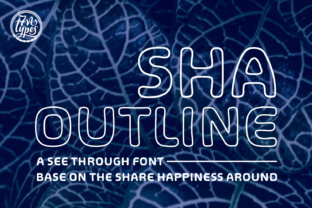
SHA Outline is a direct stylistic variation of the Share Happiness Around typeface. The original family was designed with a clear mission: to feel inclusive, accessible, and uplifting. SHA Outline takes all those core qualities and gives them a lighter, more airy treatment through outlined letterforms. The result is a typeface that retains the rounded, friendly DNA of its parent but introduces a new visual texture. The outlines create a sense of openness and transparency, making the font feel less dense and more playful. It is a subtle shift, but one that dramatically changes how the type interacts with backgrounds, colors, and other design elements. Because SHA Outline comes in two variations — Regular and Italic — you have enough flexibility to create contrast within a single project without leaving the family. This keeps your visual language consistent while still offering room for emphasis and rhythm.
The Design Qualities That Make SHA Outline Stand Out
The most immediately noticeable trait of SHA Outline is its rounded geometry. Every curve, every terminal, every corner has been softened. This is not a sharp, angular typeface meant to convey precision or urgency. Instead, it communicates warmth, patience, and approachability. In an era where digital experiences can feel cold and transactional, rounded typefaces like SHA Outline offer a humanizing effect. The letterforms are generous without being sloppy, and the spacing is open enough to keep the text breathable. Readability remains high even at smaller sizes because the outlines are crisp and the counters — the enclosed spaces inside letters like 'o', 'e', and 'a' — are clearly defined. This is no small feat for an outlined font, which can sometimes become muddy or hard to parse when scaled down. SHA Outline avoids that trap through careful construction and consistent stroke weights.
Another quality worth noting is the typeface's playful character. Playfulness in typography does not mean immature or unserious. It means the type invites engagement. It suggests that the message is meant to be enjoyed, not just consumed. SHA Outline achieves this through the slight bounce in its baseline rhythm and the cheerful openness of its forms. The Italic variation adds a gentle forward lean that feels dynamic without being aggressive. Together, the Regular and Italic give you a toolkit that can handle headlines, subheadings, short paragraphs, and even callout text with a consistent personality. If you are looking for a typeface that communicates brand values like joy, transparency, or community, SHA Outline is a strong candidate.
Branding and Identity Work
Brands that want to project a friendly, approachable image are the most obvious fit for SHA Outline. Think of a local bakery, a children's book publisher, a plant-based snack company, or a mental health app. In each of these scenarios, the visual identity needs to say "you are welcome here" from the first glance. SHA Outline does that effortlessly. It works wonderfully in logos, especially when paired with a solid, neutral companion font for body copy. The outlined nature of the type also makes it ideal for use as a watermark, a subtle pattern element, or a secondary mark that adds texture to a brand's visual system. One practical observation: because the outlines are delicate, you will want to ensure that the brand's primary colors provide enough contrast. Light outlines on a white background can disappear, so consider using SHA Outline on mid-tone or dark backgrounds where the strokes pop.
Packaging and Labels
Packaging is one of the most competitive spaces in design. A product has only a second or two to catch a shopper's eye. SHA Outline can help with that because its rounded, open forms feel tactile and honest. On a package of organic tea, a jar of honey, or a box of artisanal crackers, this typeface communicates naturalness and care. It does not scream for attention; it invites closer inspection. The Italic version works especially well for ingredient lists or short product descriptions, where a slight sense of motion keeps the eye moving. That said, you should test SHA Outline at the actual printing size. Since outlined fonts rely on thin strokes, they can sometimes lose detail if printed too small or on absorbent paper. Stick to larger sizes for headlines and consider a solid sibling font from the Share Happiness Around family for fine print.
Web and Interface Design
On screens, SHA Outline holds up better than many outlined typefaces. The rounded shapes and clear counters translate well to digital rendering, especially on high-resolution displays. You might use SHA Outline for hero section headlines, call-to-action buttons, or playful micro-copy. Because the font is so friendly, it pairs nicely with minimalist UI layouts where you want a single element to carry the emotional weight of the page. There is a caveat, though: as with any outlined font, you should avoid using SHA Outline for long body text on the web. The visual fatigue of reading outlined letters for more than a few lines is real. Keep it for display purposes, and let a more traditional sans-serif handle the paragraphs. That way, you get the best of both worlds: personality where it matters and readability where it counts.
Print and Editorial Projects
In print, SHA Outline shines in posters, flyers, magazine headers, and book covers. Its playful nature makes it a natural fit for event promotions, especially those aimed at families, creative communities, or cultural gatherings. Imagine a poster for a neighborhood street fair or a children's theater production. The typeface sets the tone before anyone even reads the words. For editorial work, consider using SHA Outline for pull quotes, chapter titles, or decorative initials. The Italic version adds a nice flourish for captions or credits. Just remember that outlined fonts can sometimes feel incomplete when printed alone. Layering SHA Outline over a subtle color block or pairing it with a textured background often produces the best results. Experiment with opacity and overlapping to create depth.
Legibility Across Sizes and Contexts
One of the first questions designers ask about any outlined font is: how small can I go? With SHA Outline, the safe zone is medium to large sizes. Below 16 points on screen or 12 points in print, the outlines start to crowd together, and the letters lose some of their crispness. This is not a flaw of the font; it is the nature of outlined type. Plan to use SHA Outline for display purposes only. If you need a companion text face, look to the solid weights of the Share Happiness Around family or a neutral sans-serif like Poppins, Montserrat, or Nunito. The rounded shapes of SHA Outline will harmonize well with other friendly sans-serifs, but you can also create interesting tension by pairing it with a more serious serif. That contrast can elevate your design and give SHA Outline even more presence.
Licensing and Availability
Before committing to SHA Outline for a commercial project, always check the licensing terms. Some variations of the Share Happiness Around family are available under open licenses, while others may require a purchase for commercial use. Make sure you understand whether your use case — whether it is a website, a product package, or a printed publication — is covered. The good news is that the typeface is widely available through major font distributors, so acquiring the proper license is usually straightforward. Because SHA Outline comes in Regular and Italic only, you are not getting a massive family with dozens of weights. That is fine for most projects, but if you need heavier or lighter variations, you will need to look elsewhere or combine it with other fonts.
Pairing Recommendations and Common Pitfalls
When pairing SHA Outline with other typefaces, the key is contrast. Since SHA Outline is rounded and light, pair it with something that has a bit more weight and structure. A sturdy sans-serif like Lato or a clean serif like Playfair Display can create a balanced hierarchy. Avoid pairing SHA Outline with another outlined or overly decorative font — that combination can quickly feel chaotic and hard to read. Another common pitfall is overusing the Italic variation. Italic outlined fonts can be visually busy, so reserve Italic for short phrases or single words that need emphasis. Too much Italic text in a layout can make the page feel unstable. Stick with Regular for most applications and use Italic sparingly, like a seasoning rather than a main ingredient.
Final Observations on SHA Outline
SHA Outline is not trying to be the most versatile typeface in your collection. It does not have dozens of weights or a complex system of alternates. What it does have is a clear personality — friendly, rounded, and open. It is a typeface that understands its role and plays it well. For designers working on projects that need to convey warmth, transparency, or joy, SHA Outline is a reliable and beautiful choice. Its two variations give you just enough flexibility to create rhythm and emphasis without straying from a unified voice. Whether you are designing a brand identity for a community-focused business, crafting playful packaging, or building a cheerful digital interface, SHA Outline brings a light touch that connects with people. And in a world where so much communication feels rushed or impersonal, a font that genuinely invites readers in is something worth holding onto.