Bright Daddy: A Practical Evaluation of an Ultra-Thin Typeface
When evaluating typefaces for a project, the range of options can feel overwhelming. Among the many styles available, ultra-thin fonts occupy a distinct niche, and Bright Daddy has emerged as a notable option in this category. This article provides a balanced, objective look at Bright Daddy—what it is, why it attracts attention, where it performs well, and where it may fall short. Whether you are a designer, a brand manager, or someone simply exploring typography options, this evaluation is designed to help you decide if Bright Daddy aligns with your specific needs.
What Is Bright Daddy?
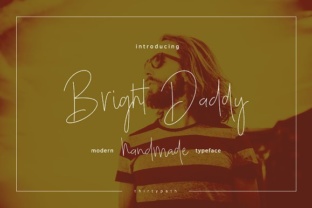
Bright Daddy is a very thin, lightweight typeface characterized by its minimal stroke width, clean lines, and airy appearance. It belongs to the family of ultra-light or hairline fonts, where the emphasis is on delicacy and subtlety rather than weight or boldness. The letterforms are designed to feel almost ethereal, with a high degree of openness and negative space. This makes Bright Daddy visually distinct from standard book or regular-weight fonts, which tend to be more solid and pronounced.
The font is typically used in contexts where a soft, refined, or modern aesthetic is desired. It is not a utilitarian workhorse for body text; rather, it serves a more specialized role in visual communication. Understanding this distinction is the first step in evaluating whether Bright Daddy is right for you.
Why Might Someone Be Interested in Bright Daddy?
Interest in Bright Daddy usually stems from a need for a typeface that communicates elegance, sophistication, or minimalism. In branding and design, thin fonts can convey a sense of luxury, precision, and modernity. Bright Daddy, in particular, offers a very fine line weight that can make layouts feel unobtrusive and open.
Designers may also be drawn to Bright Daddy for its versatility in specific roles—such as for captions, small headlines, or accent typography—where a heavier font would feel too dominant. Additionally, the font's unusual name can spark curiosity, but the real appeal lies in its visual impact when used thoughtfully.
Benefits of Using Bright Daddy
When Bright Daddy is a good fit, the benefits can be significant. Here are the key advantages to consider:
- Visual elegance: The ultra-thin strokes create a refined, high-end look that pairs well with luxury brands, fashion, cosmetics, and premium services.
- Modern minimalism: Bright Daddy aligns with minimalist design trends where less is more. It can make a layout feel clean, sophisticated, and uncluttered.
- Effective accent use: As a secondary typeface, Bright Daddy can draw subtle attention to specific elements without overwhelming the primary content.
- Good for large sizes: In larger point sizes, the thin strokes can look striking and distinctive, especially when used for logotypes or hero headings with ample white space.
- Works well in low-contrast environments: When printed on high-quality paper or displayed on bright screens, the fine lines can appear crisp and delicate.
Tradeoffs and Considerations
No typeface is without compromises, and Bright Daddy has several important tradeoffs that potential users should understand before committing.
Legibility at Small Sizes
Because Bright Daddy is a very thin font, legibility suffers significantly at small sizes. In body text (below 12–14 points), the strokes can become almost invisible, especially on screens with lower resolution or in print with less-than-ideal ink density. Readers may struggle to distinguish letters, leading to eye strain and poor readability. This is the most common criticism of ultra-thin typefaces in general, and Bright Daddy is no exception.
Limited Versatility
Bright Daddy is not a one-size-fits-all typeface. It performs best in specific scenarios—typically large display sizes with generous spacing. Using it for extended reading, dense paragraphs, or complex layouts can quickly undermine its effectiveness. Designers must carefully consider the context and medium.
Accessibility Concerns
For users with visual impairments or reading difficulties, thin fonts can be particularly challenging. Even users with normal vision may find Bright Daddy difficult to read under less-than-ideal lighting conditions or on low-contrast backgrounds. Accessibility standards (such as WCAG) often recommend minimum contrast ratios that thin fonts may struggle to meet.
Print and Production Constraints
When printing, the extremely thin strokes of Bright Daddy can disappear if the ink spreads or if the paper is absorbent. Fine details may be lost in offset printing, and the font may not reproduce well on uncoated stock or in large print runs. Proofing is essential before committing to a print project.
Situations Where Bright Daddy Is a Strong Fit
Bright Daddy shines in specific contexts. If your project aligns with the following conditions, it may be an excellent choice:
- High-end branding: For luxury brands, boutique hotels, premium cosmetics, or fine jewelry, the delicate appearance of Bright Daddy can reinforce a sense of exclusivity and refinement.
- Large-scale display use: In headlines, hero text, or logotypes set at 36 points or larger, the thin strokes become a design statement. The negative space creates a sophisticated, airy feel.
- Minimalist layouts: If your design philosophy emphasizes white space, simplicity, and restraint, Bright Daddy can complement that approach without competing for attention.
- Digital interfaces with high-resolution screens: On retina displays or high-PPI screens, the fine lines can render cleanly and maintain their intended delicacy.
- Short accent text: For pull quotes, captions, or labels where only a few words are needed, Bright Daddy can add a touch of elegance without affecting readability.
Situations Where Alternatives May Be Worth Considering
There are also clear scenarios where Bright Daddy is not the optimal choice. In these cases, exploring alternatives may serve your audience and goals better:
- Body text and long-form reading: For articles, reports, books, or any content where readers need to absorb large amounts of text, a standard-weight serif or sans-serif font (such as Garamond, Helvetica, or Merriweather) will provide far better legibility.
- Low-resolution screens: On older monitors, projectors, or mobile devices with lower pixel density, thin fonts often degrade into blurry or broken lines. A medium or regular-weight font is safer.
- Accessibility-focused projects: If your audience includes users with visual impairments, or if you need to meet WCAG compliance, choose a typeface with adequate stroke weight and contrast. Bright Daddy is unlikely to pass accessibility thresholds for body text.
- Print on absorbent or uncoated paper: If your project involves newsprint, recycled paper, or other absorbent surfaces, a heavier font will reproduce more reliably. Bright Daddy may lose its fine details.
- Multilingual or complex typography: For scripts that require distinct letterforms or for languages with diacritical marks, the thin strokes of Bright Daddy may cause confusion or loss of character definition.
Practical Decision-Making Insights
To determine whether Bright Daddy aligns with your goals, start by clarifying the primary purpose of the text. If the goal is to communicate information clearly and efficiently, an ultra-thin font is likely a mismatch. If the goal is to evoke a mood, support a visual identity, or add decorative flair, Bright Daddy may be worth exploring.
Here are practical steps to evaluate Bright Daddy for your project:
- Test at actual usage size: Do not judge the font based on a preview at 72 points. Set your sample text at the size it will actually appear—whether 12 points for captions or 48 points for a headline—and evaluate legibility.
- Check contrast and background: View Bright Daddy on the exact background color and texture it will be used with. Light text on a dark background or dark text on a light background both affect how thin strokes are perceived.
- Consider the medium: If the project is digital, test on multiple devices and screen types. If it is print, request a proof on the actual stock before finalizing.
- Get feedback from others: Share your design with colleagues or a sample audience. Ask specifically about readability and whether any text is hard to read.
- Compare with similar ultra-thin typefaces: Bright Daddy is not the only thin font available. Compare it with alternatives like Helvetica Thin, Gotham Thin, or Montserrat Thin to see which offers the best balance of aesthetics and practicality for your use case.
- Plan for fallbacks: In web design, always include fallback fonts in your CSS. If Bright Daddy fails to load or renders poorly, a secondary font can maintain some visual consistency.
Aligning Bright Daddy with Your Goals
Ultimately, the decision to use Bright Daddy depends on a clear understanding of your priorities. If your primary goal is to create a distinctive, elegant visual identity and you have control over the medium and audience, Bright Daddy can be a powerful tool. If your primary goal is to maximize readability, accessibility, and versatility, you will likely be better served by a more conventional typeface.
Bright Daddy is a specialized tool, not a universal solution. It requires careful handling, thoughtful placement, and a willingness to accept its limitations. For designers who appreciate subtlety and have the expertise to deploy it wisely, Bright Daddy offers a unique aesthetic that can elevate a project. For those seeking a dependable workhorse for everyday text, it is best left on the shelf.
By weighing the benefits, tradeoffs, and context-specific fit, you can make an informed decision about whether Bright Daddy is the right typeface for your next project. The key is to match the tool to the task, and in the right hands, Bright Daddy can be a memorable and effective part of your typographic toolkit.