Spike: A Font That Demands to Be Noticed
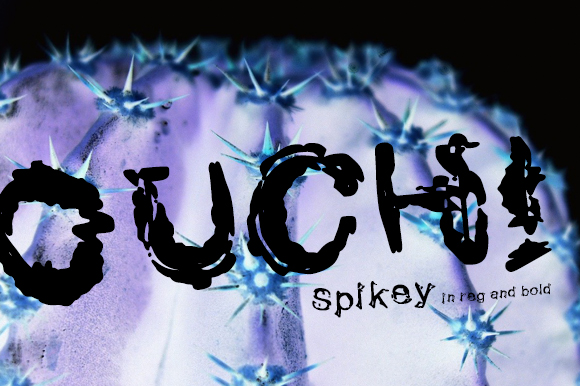
Some fonts whisper. Others shout. Then there are fonts like Spike — the ones that practically leap off the page and grab the reader by the collar. With its sharp angles, piercing serifs, and an overall attitude that feels almost aggressive, Spike is not a font for the faint of heart. It carries a name that suits it perfectly: this typeface can genuinely sting. Available in regular and bold weights, it delivers a visual punch that works hard for anyone who needs their message to stand out in a crowded visual space.
But what exactly makes a font like Spike useful beyond its initial shock value? And why would someone choose a deliberately pointy, spiky typeface over something more neutral or friendly? The answer depends heavily on who you are and what you are trying to communicate. Let's explore how different people might approach this font and what it can realistically do for various projects.
What Spike Actually Offers
At its core, Spike is a display typeface designed for impact. It is not a body text font that you would set an entire novel in. Instead, it shines in headlines, logos, posters, packaging, and any context where you need a strong visual statement. The regular weight provides clean, sharp edges that remain readable at larger sizes, while the bold weight amplifies the aggressive feel, making each letterform feel more substantial and more dangerous in a typographic sense.
The design deliberately avoids curves and softness. Every terminal ends in a point. Every crossbar feels like a blade. This gives Spike a personality that aligns well with themes like danger, speed, power, rebellion, or anything edgy. It also works surprisingly well in more playful contexts when paired with the right colors and supporting visuals. The key is knowing when to let it take center stage and when to pull it back.
Different Eyes See Different Value
A font like Spike does not serve everyone the same way. Its usefulness shifts depending on your goals, your audience, and your comfort level with bold design choices.
For Creators and Designers
If you are a designer working on branding, album covers, event posters, or merchandise, Spike gives you a tool that immediately sets a tone. You do not have to explain to people that the brand is edgy or unconventional — the font does that work for you. The bold weight, in particular, works well for logotype concepts where you want the name to feel aggressive without relying on imagery or icons.
One practical example: a designer creating a poster for a heavy music festival could use Spike's bold weight for the headline and the regular weight for supporting details like dates and venue names. The contrast between the two weights is significant enough to create hierarchy without switching to a completely different typeface. This keeps the visual language cohesive while still giving the designer room to breathe.
What to watch for: Spike is not ideal for small text. At sizes below 18 points, the sharp details can start to blur together, especially in print. Use it where it can breathe — large and proud.
For Entrepreneurs and Small Business Owners
Business owners often face a dilemma: how do you stand out without looking unprofessional? Spike answers that question for certain industries. A tattoo shop, a skateboard company, a gaming lounge, or a cybersecurity firm could all benefit from a typeface that communicates precision and edge.
Imagine a small cybersecurity consultancy that wants to project both competence and an aggressive stance against threats. Using Spike in their logo or on their website headers sends a subtle message: we are sharp, we are serious, and we will cut through the noise. The key is restraint. Using Spike sparingly — perhaps only in the logo and main headings — lets the font do its job without overwhelming the rest of the brand identity.
For a local coffee shop or a bakery, however, Spike would likely feel out of place. The font carries a strong personality that does not bend easily toward warmth or softness. Knowing this boundary is exactly what makes a business owner's choice strategic rather than impulsive.
For Marketers and Content Creators
Marketers who produce social media graphics, YouTube thumbnails, or landing pages need fonts that stop the scroll. Spike is excellent for grabbing attention in a feed where users are swiping past dozens of posts per minute. A single word set in Spike's bold weight — something like "SALE" or "WARNING" or "LIMITED" — can outperform a more generic font simply because it looks different and demands a second look.
That said, marketers should be careful about overuse. If every graphic uses Spike, the impact fades. The font works best as an accent, not as a default. Pair it with a clean, minimal sans-serif for body copy to maintain readability while preserving the visual punch where it matters most.
For Educators and Hobbyists
Teachers putting together materials for a lesson on typography, graphic design, or visual communication will find Spike to be a great case study. It exemplifies how form communicates emotion without any words. A simple exercise: show students a word set in Spike versus the same word set in a rounded, friendly font like Comic Sans or a neutral font like Arial. The difference in perceived meaning is immediate and dramatic.
Hobbyists exploring design for fun can use Spike to experiment with contrast and mood. Try setting a single word like "sharp" or "danger" in Spike and see how the visual matches the meaning. This kind of hands-on exploration builds intuition for how fonts work in the real world.
Practical Considerations Before You Commit
Before you download Spike and start using it everywhere, take a moment to evaluate a few factors that affect how well it will actually serve your project.
Readability at Scale
Spike is not a body text font. If you need to communicate long paragraphs of information, choose something neutral and pair Spike only for headings. The font's sharp details become a liability at small sizes, especially on screens where anti-aliasing can soften or distort the points. Test it at the exact sizes you plan to use before committing to a layout.
Licensing and Cost
Like many display fonts, Spike may come with different licensing options depending on where you purchase it. If you are using it for a commercial project — a logo, a product label, or a website — make sure your license covers commercial use. Some fonts are free for personal projects but require a paid license for business applications. This is not unique to Spike, but it is worth double-checking to avoid headaches later.
Pairing with Other Fonts
Spike works best when it is the only font with a strong personality in your design. Pair it with something simple and stable. A clean sans-serif like Open Sans, Lato, or Montserrat balances the aggression of Spike and gives the reader's eyes a place to rest. Avoid pairing Spike with another display font — the result is usually chaotic and hard to read.
Who Should Probably Skip Spike
Not every project needs a font that stings. If your brand voice is soft, welcoming, traditional, or corporate in a conservative sense, Spike will fight against that identity rather than support it. A law firm, a healthcare provider, or a financial advisory firm would likely find Spike jarring and misaligned with the trust they need to build. Similarly, if your audience skews older or more formal, a font this aggressive can create unintended friction.
That is not a failure of the font. It simply means Spike has a specific lane, and staying within that lane is what makes it effective. Using it outside of its natural context does not make you bold — it just makes your design confusing.
Is Spike Right for You?
The best way to answer that question is to ask yourself what feeling you want your audience to experience. Do you want them to feel a little on edge? Do you want them to perceive sharpness, speed, or danger? Do you need to cut through the visual noise of a crowded market? If yes, Spike could be exactly the tool you need.
Start with one project. Use it on a single headline or a logo concept. See how it feels in context, how people react to it, and whether it helps communicate the message you intended. Fonts are tools, and like any tool, the only way to know if it fits is to pick it up and try it.
Spike is not for everyone. But for those who need a font that stings, it delivers exactly what it promises — and that kind of honesty in design is rare.