Pryma: A Floral Digital Font with Hand-Drawn Charm
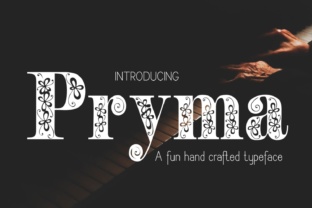
Some fonts are built for speed and clarity. Others are made to stop people mid-scroll, to make them pause and smile. Pryma belongs to the second group. It is a digital drawn font that pairs clean lettering with intricate floral decorations — swirls, leaves, blossoms that wrap around the characters or stand alone as embellishments. The result is a typeface that feels personal, crafted, and full of natural elegance. Whether you are designing a wedding invitation, building a brand for a botanical shop, or simply looking for a way to add warmth to a personal project, Pryma offers a distinctive visual voice.
This article explores what makes Pryma different, why it appeals to a wide range of users, and how you can decide if it is the right tool for your next project.
The Character of Pryma
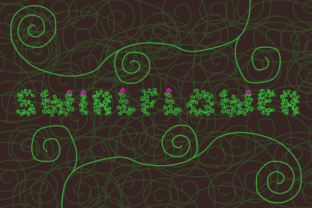
Pryma is not a standard sans-serif or a rigid serif. It is hand-drawn in style, which means each letter carries slight irregularities that make it feel human and approachable. The floral decorations are not afterthoughts — they are integrated into the font’s design. You might see a vine curling from the tail of a lowercase “y,” or a tiny flower perched above an “i.” These details give the font a romantic, organic personality that is hard to replicate with generic clip art or shape layers.
Because the floral elements are part of the font itself, you do not need to spend hours arranging leaves and stems around your text. You simply type, and the embellishments appear where the designer intended them. This combination of drawn letterforms and botanical ornamentation makes Pryma a complete decorative package, suitable for both headlines and short phrases where impact matters more than legibility in long paragraphs.
Why Different Creators Care About Pryma
Fonts are tools, but they are also emotional cues. A single typeface can change how a message is received. Pryma taps into a desire for authenticity, beauty, and a touch of nature — qualities that resonate across many fields.
- Graphic designers and illustrators value Pryma for its handmade aesthetic. It saves them the trouble of drawing floral letters from scratch, while still allowing them to customize colors, spacing, and layout. For branding projects that need a gentle, feminine, or earthy feel — such as a skincare line, a florist, or a lifestyle blog — Pryma delivers a ready-made mood.
- Small business owners often lack the budget for custom illustration work. Pryma gives them a professional-looking way to decorate menus, signage, social media posts, and packaging without hiring a designer. The floral details add perceived value, making even simple product tags look artisanal.
- Wedding and event planners find Pryma especially useful for save-the-dates, invites, place cards, and signage. The floral accents match natural, garden, or rustic themes, and the hand-drawn quality feels intimate rather than corporate.
- Hobbyists and DIY enthusiasts — from scrapbookers to bullet journal enthusiasts — can use Pryma in digital projects or print at home. Since it is a digital font, they can enlarge it for a banner or shrink it for a card, and the floral elements scale cleanly.
- Educators and librarians who create bulletin boards, reading corner signs, or classroom certificates may appreciate Pryma’s whimsical but readable forms. The floral decorations can make routine notices more inviting, especially in early childhood or art-focused environments.
Practical Priorities: What Matters Most for Different Users
Not everyone evaluates a font in the same way. Some users prioritize ease of installation and use, while others care about licensing for commercial work, or how the font behaves at different sizes. Here is how those priorities shift depending on your role and project type.
Ease of Use and Reliability
For a beginner — someone who has never downloaded and installed a font — Pryma is straightforward. It comes as a standard OTF or TTF file that works on both Windows and macOS. Once installed, it appears in any application that supports custom fonts: Word, Canva, Adobe InDesign, Photoshop, or even Google Docs (through a desktop installation). The floral decorations are part of the character set, so you do not need to fiddle with special extra layers or CSS. You just type, and the typography includes the ornaments.
A professional designer may look beyond basic installation and evaluate how well the font handles kerning (the spacing between pairs of letters), how the floral elements interact with adjoining characters, and whether the font includes alternate glyphs or ligatures. Pryma typically includes a standard set of uppercase and lowercase letters, numbers, punctuation, and a few extra decorative glyphs accessible through a glyph panel in layout software. For complex compositions, the designer might manually adjust spacing or layer additional floral elements from the font’s extras.
Cost and Commercial Value
Pryma is a premium font, not a free system font. The cost reflects the designer’s work in drawing each character and each floral detail. For a freelancer or small agency, the investment is usually recouped quickly if the font becomes part of a client project. One wedding invitation suite created with Pryma can justify the purchase price.
A hobbyist or occasional user may want to weigh the cost against how many projects they genuinely require this style. If you only need floral typography for a single event, consider whether a one-time font license (often USD 20–40) makes sense, or if you can achieve a similar look with a free alternative. However, free fonts rarely offer the same level of polish, character set completeness, or legal clearance for commercial use. Buying Pryma ensures both quality and peace of mind.
Quality and Flexibility
Quality in a decorative font like Pryma comes down to balance. The floral elements should not overwhelm the letterforms. The letters themselves must remain readable, even when surrounded by leaves and vines. Pryma achieves this by keeping the floral accents relatively compact and positioning them so they flow with the letter shapes rather than crossing or obscuring them.
Flexibility matters for anyone who needs the font to work across print and digital media. Pryma performs well on invitations printed on textured paper, but it also holds up on a high-resolution screen for an Instagram post. The hand-drawn quality ensures it does not look cold or mechanical. For best results, use the font at 18 points or larger; at very small sizes, the floral details may become hard to see.
Learning Value
For students in graphic design or typography courses, studying a font like Pryma offers insight into how hand-drawn elements can be digitized without losing their organic feel. An educator might assign students to compare Pryma with a traditional script font, analyzing how decoration changes reading rhythm. For self-taught creators, experimenting with Pryma in different apps helps develop an eye for composition: where to place decorative text, how to pair it with simpler fonts for contrast, and when to let the flowers shine alone.
Practical Examples Across Audiences
Seeing how others use Pryma can help you imagine it in your own projects. Here are a few scenarios from different perspectives.
For a Wedding Invitation (Bride & Groom or Event Planner)
Imagine an invitation set with the couple’s names in Pryma, centered and sized at 36 points. The floral swashes extend naturally from the first and last letters. Paired with a clean sans-serif for the details (“Saturday, June 15th, 2025 at 3 PM”), the contrast is elegant. You can print on a lightweight card stock with a subtle linen finish, and the hand-drawn quality feels like letterpress without the cost. The same font can be used for the thank-you cards and the seating chart, creating a cohesive visual identity.
For a Small Plant Shop’s Branding (Business Owner)
A local plant store uses Pryma on its logo, price tags, and tote bags. The name “Root & Bloom” in Pryma conveys the natural, handmade vibe of the shop. On Instagram, the owners use the font in highlight covers and sale announcements. Because the floral decorations are built into the letters, every post looks cohesive without needing a designer to add clip art. Over time, customers begin to associate that flowing leaf motif with the shop brand.
For a DIY Birthday Card (Hobbyist)
You want to make a card for a friend who loves gardening. You open a blank document in your favorite word processor, type “Happy Birthday, Rose!” in Pryma, and the letters automatically include tiny flowers. You print on cream cardstock, cut it to size, and glue it to a folded base. The font’s personality does the work — no drawing skills required. The friend appreciates the thoughtful design, and you made it in ten minutes.
For a Classroom Sign (Teacher)
A kindergarten teacher prints “Welcome to the Garden Room” in Pryma for the door sign. The floral letters catch the children’s eyes and set a warm, imaginative tone. The font is readable enough for parents to recognize the phrase from across the hall. The teacher also uses it for name tags on a bulletin board — the flowers make each name feel special without being distracting.
Is Pryma Right for Your Goals?
Choosing a font often comes down to matching its personality with your message. Pryma works best when you want to communicate warmth, beauty, and a personal touch. It is not designed for dense paragraphs, formal business reports, or minimalist branding. If your project calls for a clean, neutral typeface, Pryma might feel overly decorative. But if you need typography that makes people feel something — that invites them to look closer — Pryma is a strong contender.
Consider the following before you decide:
- Your medium: Will you use it in print or on screen? For web usage, ensure the font is licensed for embedding (some licenses require an extra fee). For print, the floral details will be clearest on uncoated paper or in large formats.
- Your audience: Is your audience likely to respond to a floral, hand-drawn style? If you are designing for a tech startup or a law firm, Pryma may feel out of place. If you are targeting a creative, female-skewing, or nature-oriented demographic, it fits naturally.
- Your skill level: Beginners can start immediately by installing the font and experimenting. Advanced users can dig into the glyph palette and combine Pryma’s decorative elements with other fonts for layered compositions.
- Your budget: Compare the license cost with the value it brings to your project. A one-time purchase that elevates multiple designs is often worth it.
- Your long-term use: If you see yourself creating content for weddings, botanical brands, greeting cards, or lifestyle blogs over several months, Pryma becomes a reliable asset in your toolkit.
Final Thoughts on Pryma
Pryma stands out because it merges two things we often separate: legible text and decorative art. The floral decorations are not slapped on after the fact; they are woven into the design. That integration makes the font feel cohesive and intentional. Whether you are a professional looking for a signature style or a hobbyist wanting to add a touch of nature to your next project, Pryma offers a way to communicate with charm and personality. Try a sample size, test it on a mockup, and see if its hand-drawn blossoms align with the message you want to share.